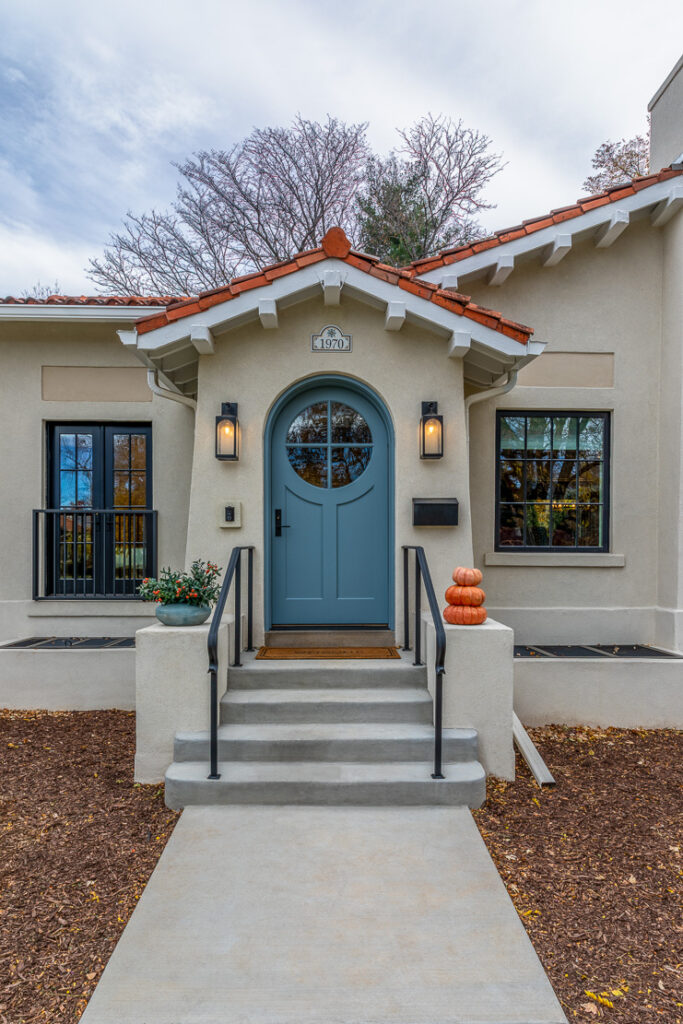
A 1917 Park Hill home. A young family. And a structure with character and history.
This remodel was not about starting over.
It was about knowing what deserved to stay, and being deliberate about everything else.
The original Spanish Colonial Revival elements – the arches, the tile, the warmth – set the direction. Not as constraints, but as anchors. Everything that followed was designed around how this family actually lives.
The result is a home that feels inevitable.
Not because it stayed the same, but because every change had a reason.
Fresh stucco. A simplified landscape. And a sky blue front door – recreated from the original and returned to where it belongs.
In Park Hill, it reads exactly right.
The Plan Behind The Design
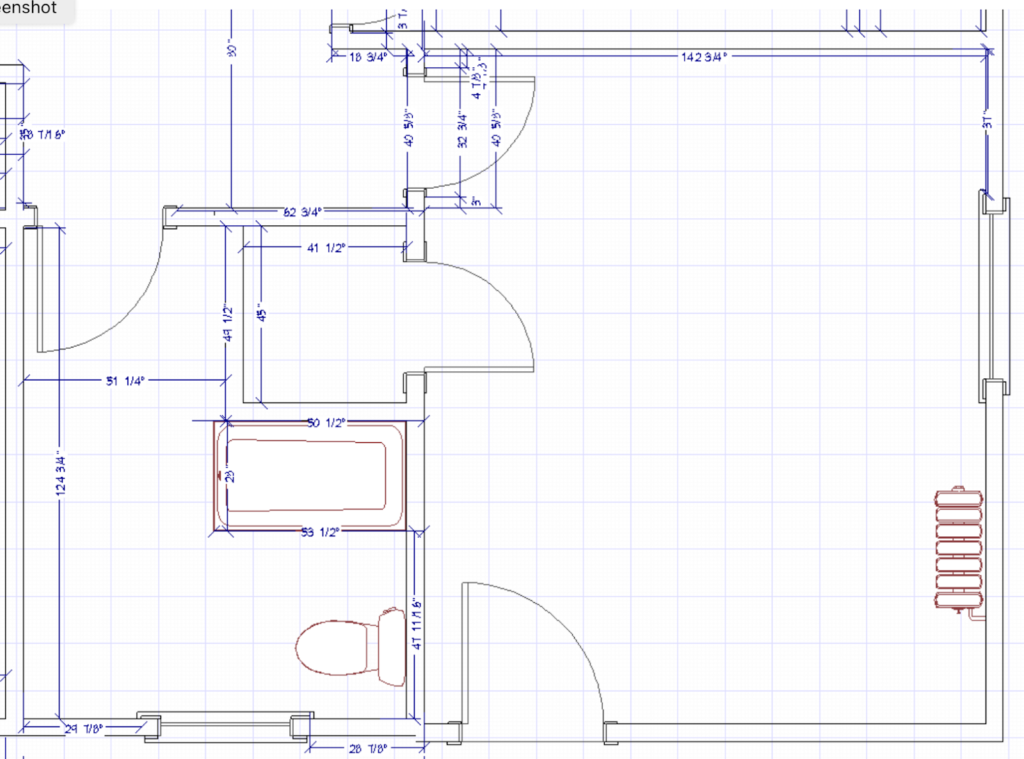
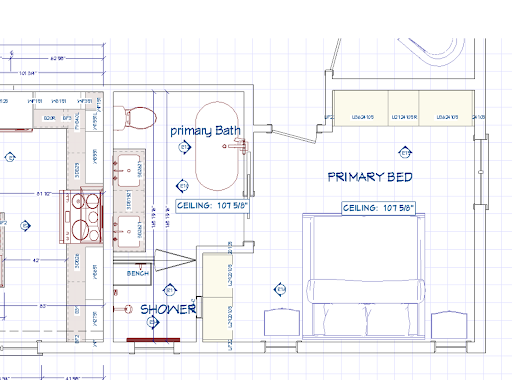
Every room in this house started as a decision – made on paper first. Here is how the primary suite was reconfigured to create an ensuite bathroom within the existing footprint – and how the kitchen was reimagined to become the functional center of the home it was always meant to be.
Kitchen and mudroom - Built for How This Family Actually Lives
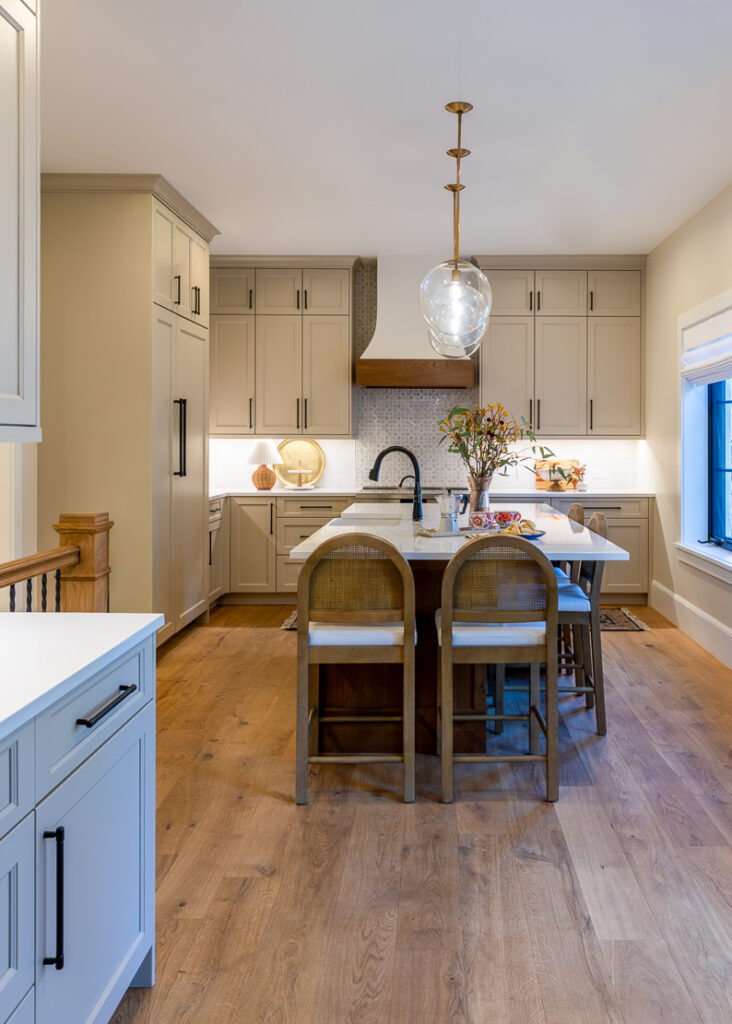
The original kitchen of a 1917 home was not built to be the center of family life. Now it is the heart of everything.
A new island handles everyday meals and the kind of casual gathering that happens without planning. Expanded counter and prep space gives the family enough space to actually cook. The focal point is a custom range hood – plaster and wood paneling, framed by a Mexican-inspired tile in a warm neutral palette – the detail that sets the tone for the whole room.
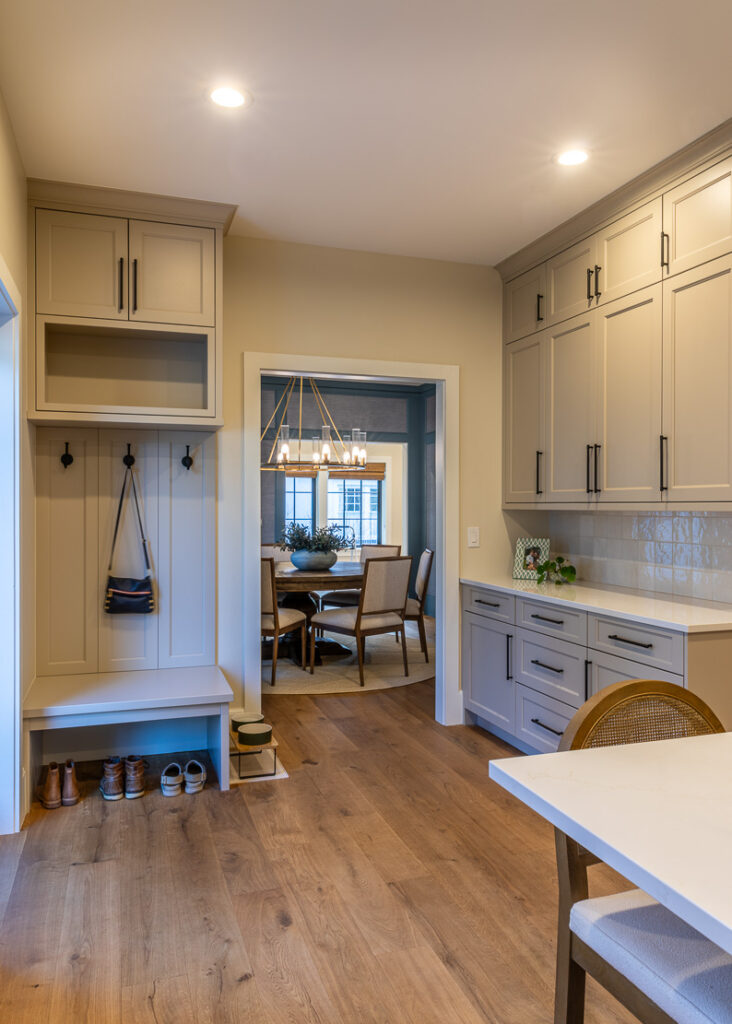
At the main entry, a dedicated mudroom and drop zone handles the daily reality: shoes, coats, backpacks, the chaos that follows a family through the door. Built-in storage keeps everything contained and off the kitchen surfaces. The transition from outside to inside happens here – so the rest of the home doesn’t have to absorb it.
Butler’s Pantry and Bar - Entertaining Without Leaving the Room
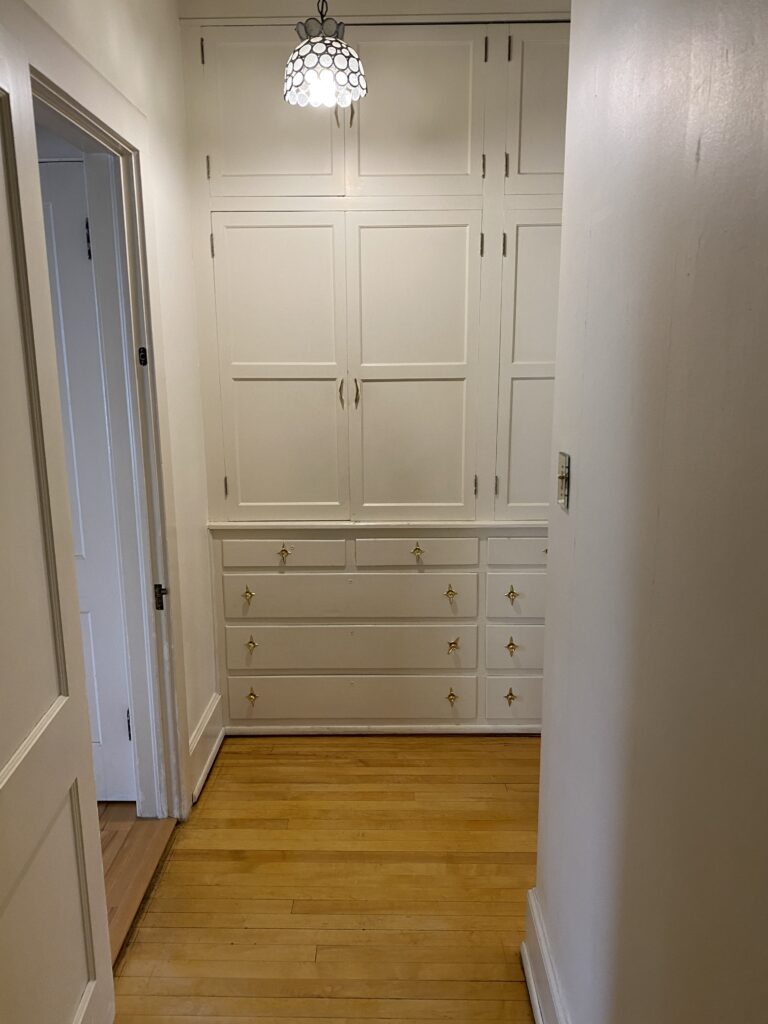
BEFORE
AFTER
The original layout forced hosting into two separate spaces. Cooking happened in one room. Gathering happened in another. The host was always moving between them.
This reconfiguration fixes that.
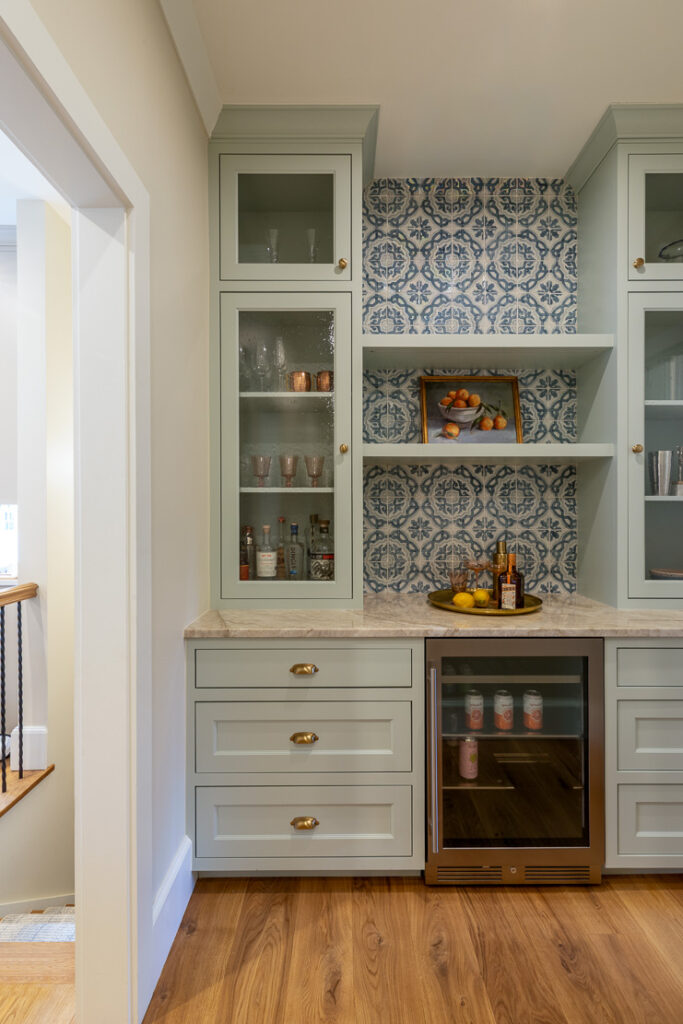
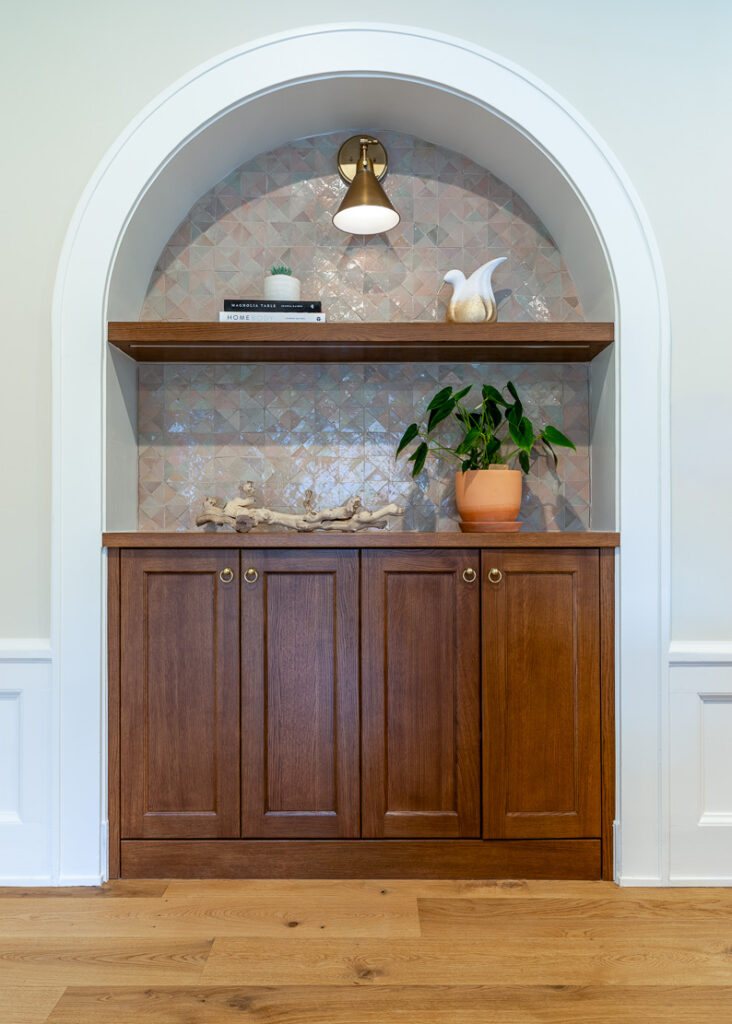
Positioned directly between the kitchen and family room, the butler’s pantry and bar becomes a working transition point – where drinks are poured, glasses are refilled, and everything needed for the evening stays within reach.
The kitchen stays focused. The conversation doesn’t break.
Spanish Colonial Revival–inspired tile and robin’s egg blue cabinetry carry the home’s palette into a space that works as hard as the rooms around it without ever pulling attention away from them.
Family Room - Custom Furnishings Designed for Real Life
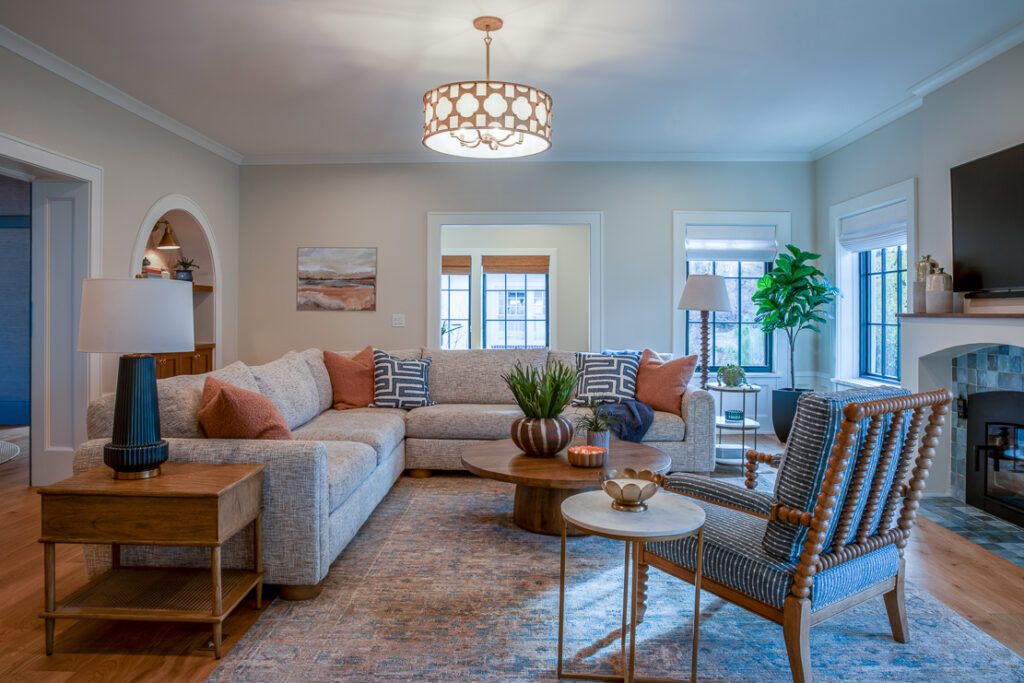
Every piece of custom furnishing – the sectional, the armchairs, the coffee table, the rug – was chosen with a young, growing family in mind. The round coffee table removes sharp corners without announcing itself as a safety decision. The arch motif from the original architecture reappears in the redesigned bookcases, lined with terracotta tile in a subtle triangular pattern. The history of the house and the reality of daily life coexist in the same room.
Dining Room - Knowing what NOT to Change
Not everything needed to be redesigned.
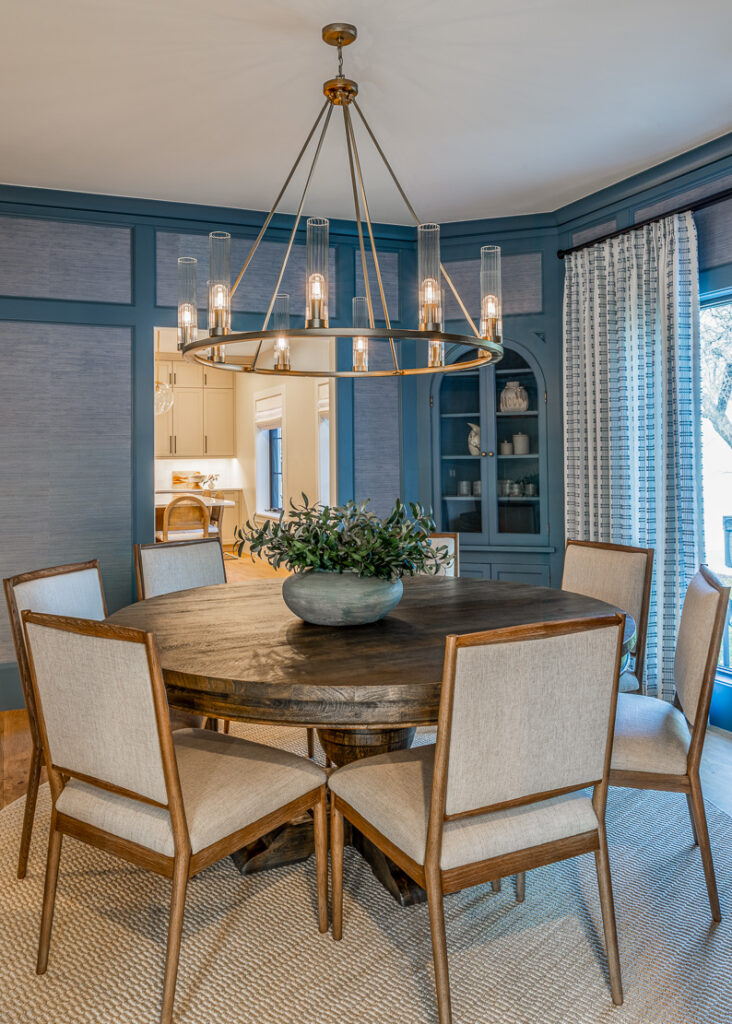
The original millwork was one of the few elements in the house that had real presence, and removing it would have erased part of the home’s identity. So it stayed. Carefully restored. Reproduced where necessary.
The shift happens around it.
Color-drenched walls and textured grasscloth pull the room out of the past without competing with it. The contrast is intentional – ornate detail against saturated color, history against something more current.
It’s a room that holds attention without relying on newness to do it.
Primary Suite - A Modest Footprint, Used Well
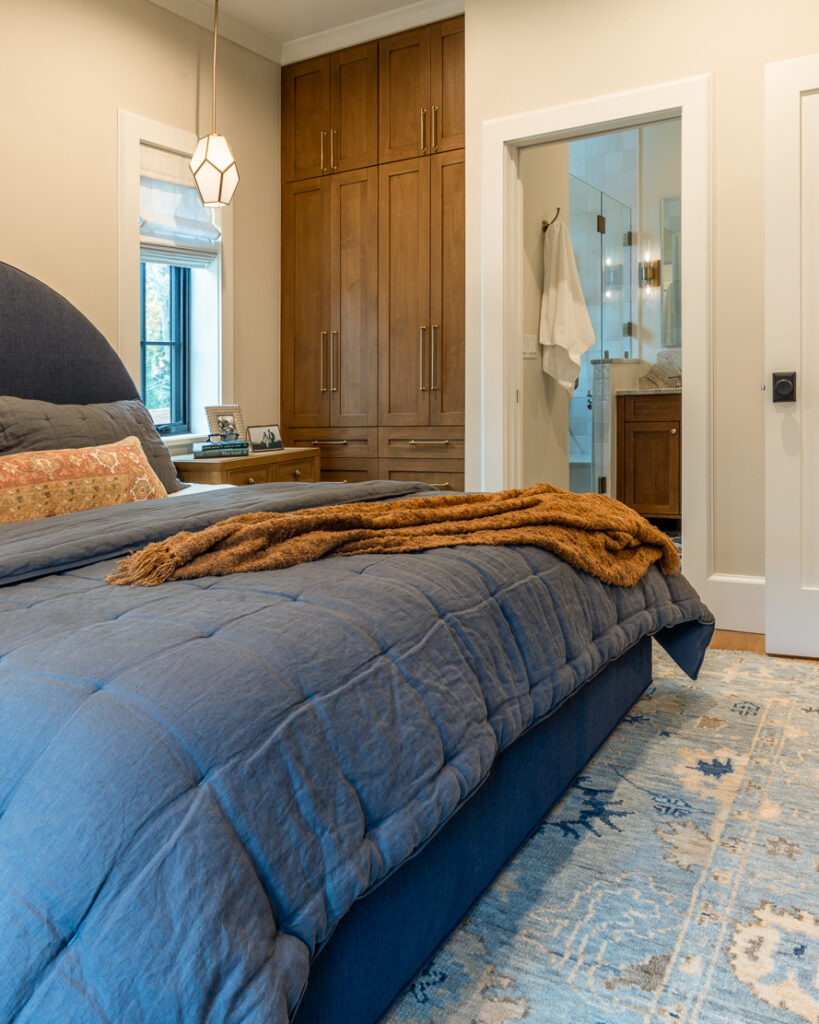
Reconfiguring the existing floor plan created space for an ensuite bathroom. Not a lot of extra square footage – but enough, when every inch is considered.
A built-in closet system replaces the dresser and armoire, keeping the room open and storage-rich without visual noise. Pendant lights above the nightstands free the surfaces for books, photos, the things that actually get used. New windows installed to frame the headboard bring in the backyard and the light that wasn’t there before.
Nothing wasted. Nothing missing.
Fiona’s Bathroom - Designed for a Kid, Not Decorated for One
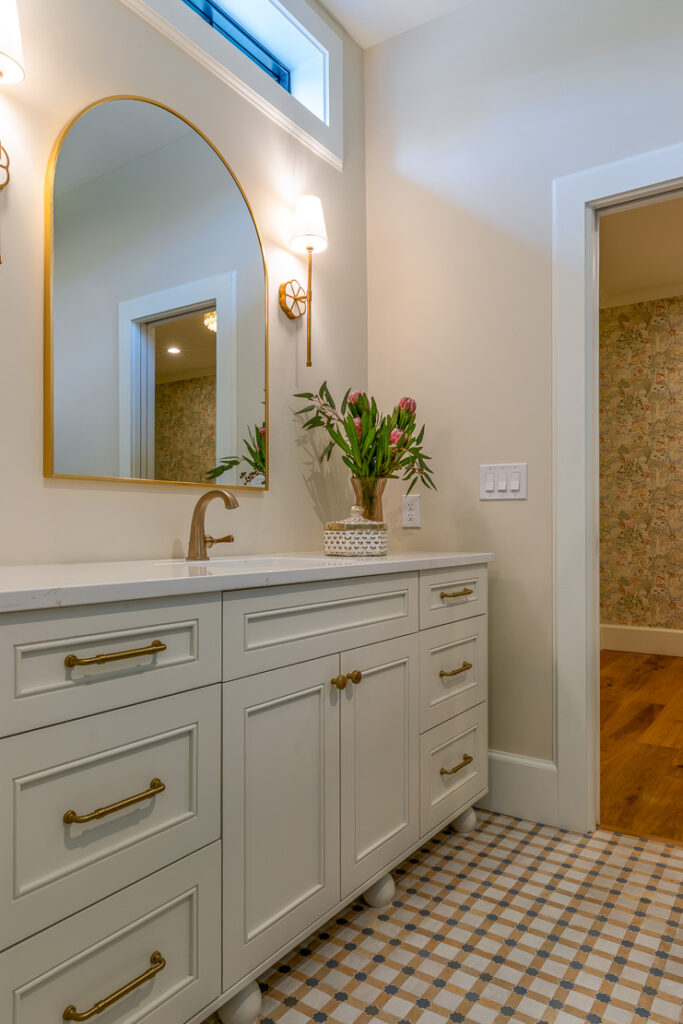
Designed for a child. Not decorated for one.
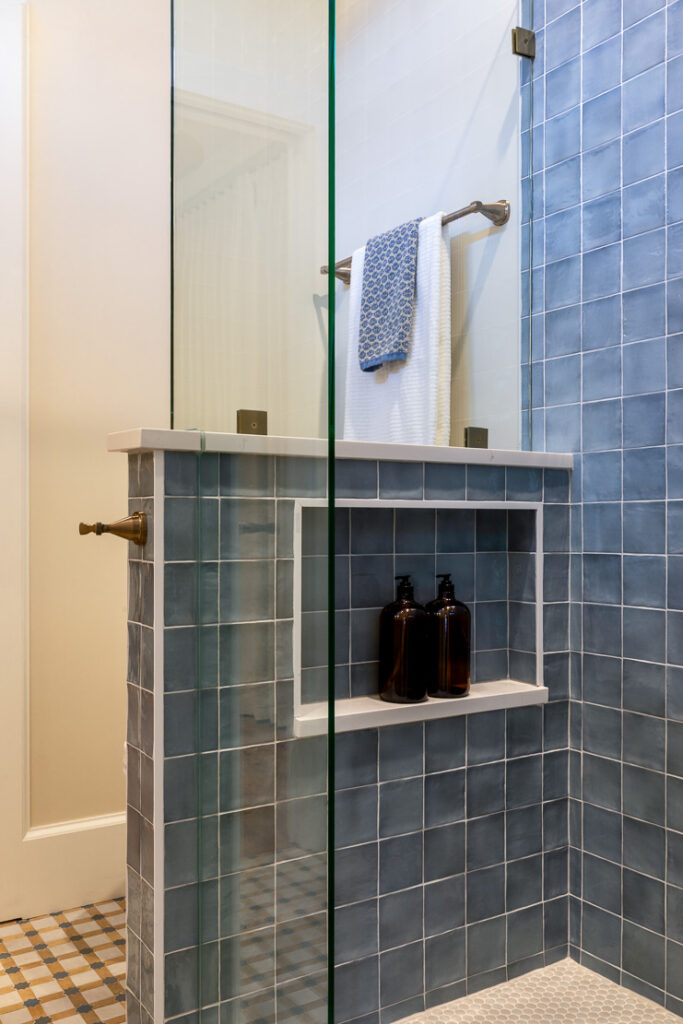
The custom tile floor grounds the space with pattern and color without tipping into novelty. A transom window brings in natural light. Brass sconces and an arched mirror add a quiet polish. It is sweet without being precious – layered to feel right long after childhood is over.
Powder Room - The Room That Makes an Impression
A powder room is one of the most visited rooms in any home, and one of the most overlooked opportunities. Small room, but big impact.
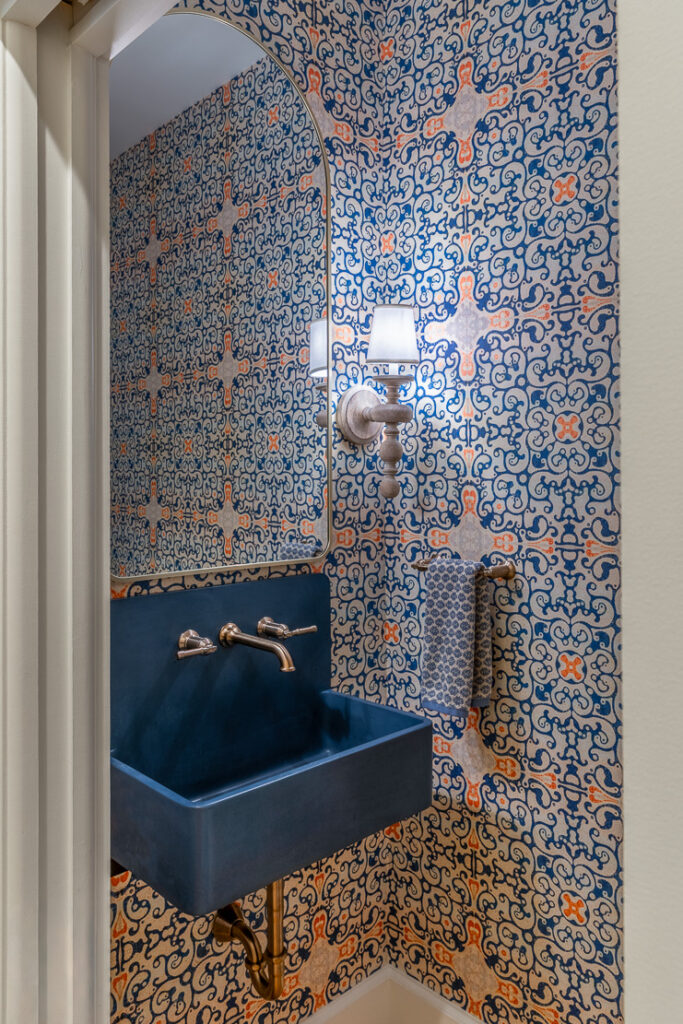
Spanish tile–inspired wallpaper. A blue clay sink. Wood sconces and a gold-trimmed arched mirror that echoes the home’s 1917 Spanish Colonial roots.
Every decision in this home traces back to the same principle: keep what matters. Change what doesn’t. Be intentional about the difference.
That is what allows a home like this to evolve without losing its identity.
And why, when it’s done right, it doesn’t feel redesigned.