Traditional Details, Modern Touches - Greenwood Village
"We have told you both how much we adore our new home. This truly could never have been accomplished without you both. Your vision, patience and willingness to work with our wish list and budget all came together in a way we never could have imagined."
~ Greenwood Village Clients
After decades in their previous home, these clients found a property in Greenwood Village with strong bones and interiors that felt heavy and dated. Their vision was clear for the full home remodel: honor the traditional architecture while introducing a cleaner, more current perspective that better reflected who they are today.
Denver Design Group reimagined the entire home – every room, every finish, every detail – guiding each structural and design decision from layout through final installation.
Entry and Staircase - First Impressions Redefined:
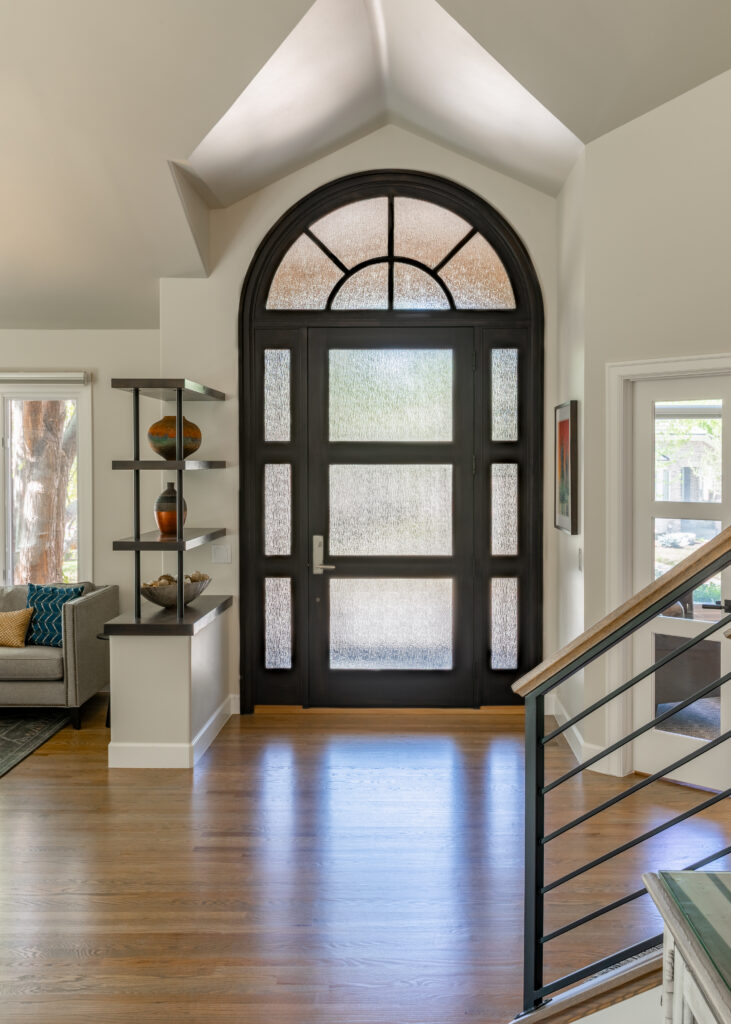
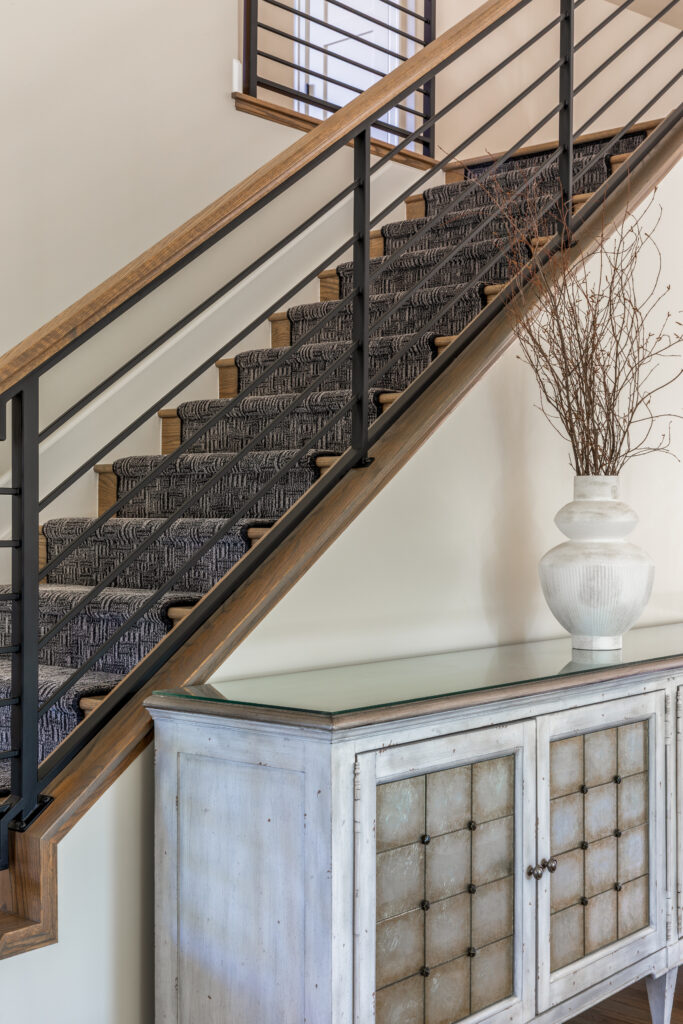
The entryway sets the tone immediately. The modern horizontal stair railing replaces what was once a traditional balustrade – a single change that signals the entire shift in direction without erasing the home’s original character. The arched window above the front door stays. It belonged there in 1990 and it belongs there now. What changed is everything around it. When a home has been thoughtfully updated rather than aggressively modernized, the original architectural details become assets rather than liabilities. The entry communicates that from the moment you walk in.
Kitchen - Designed for Gathering
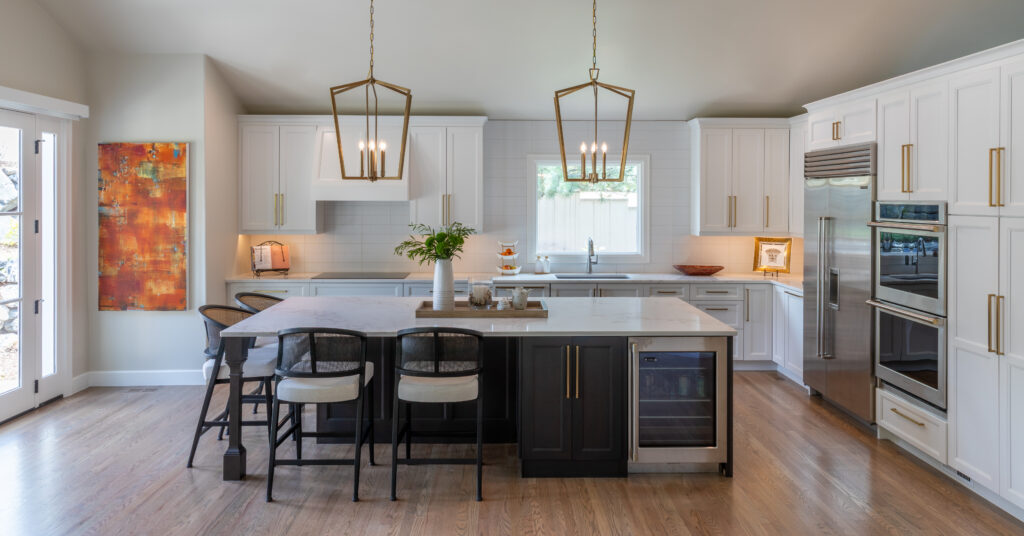
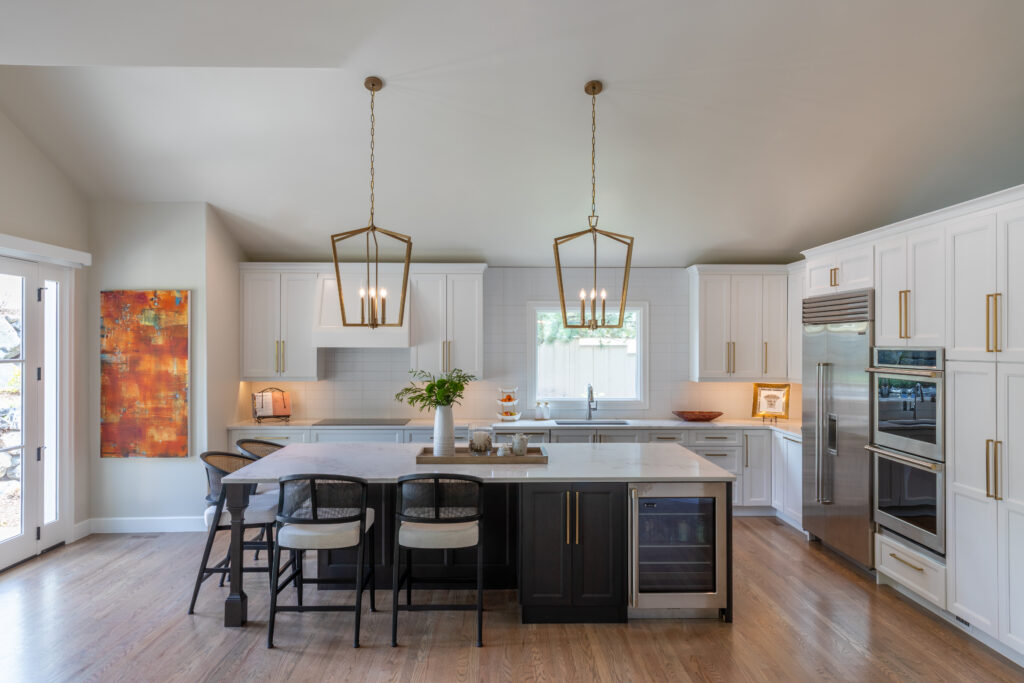
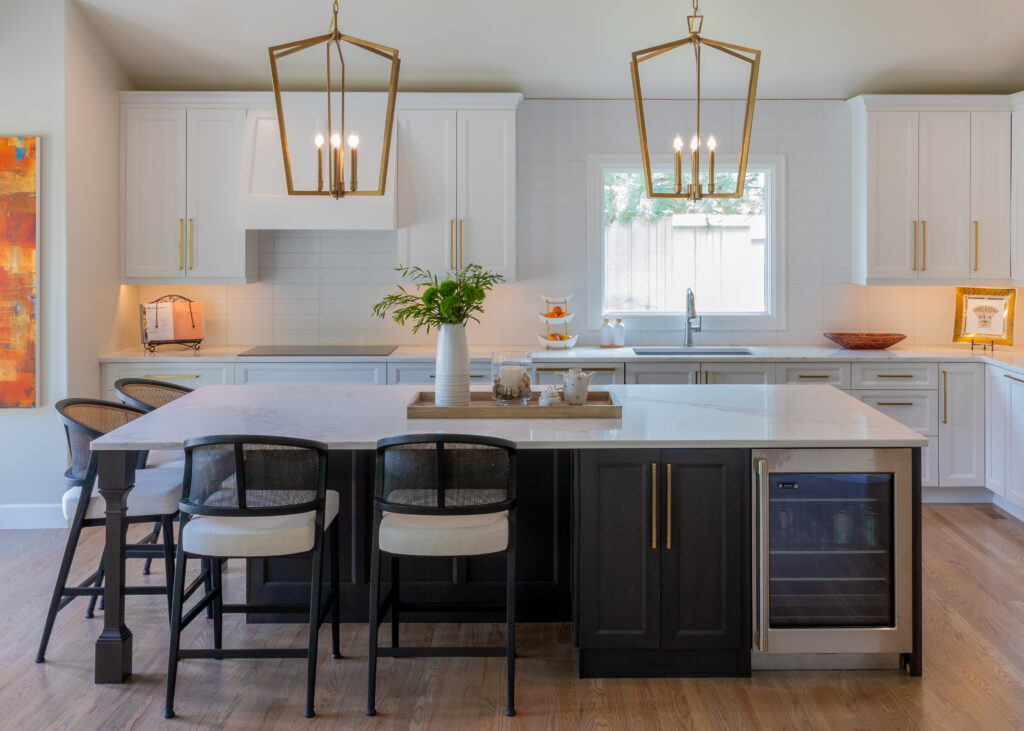
The kitchen transformation is the most structurally significant change in the home. A large island was added specifically for gathering and entertaining – not as a storage afterthought but as the spatial center of the room. The existing sliding door was replaced with a window, and a new French door was introduced to create a direct, intentional connection to the patio and outdoor living. A larger window over the sink changes the quality of light in the space entirely. The partial wall between the kitchen and dining room was opened at the upper portion – enough to allow light to move freely between the two spaces without sacrificing the definition that makes each room feel purposeful rather than just open.
These aren’t cosmetic changes. Every structural decision here was made in service of how this family actually uses the space.
Dining Room — Centered and Intentional
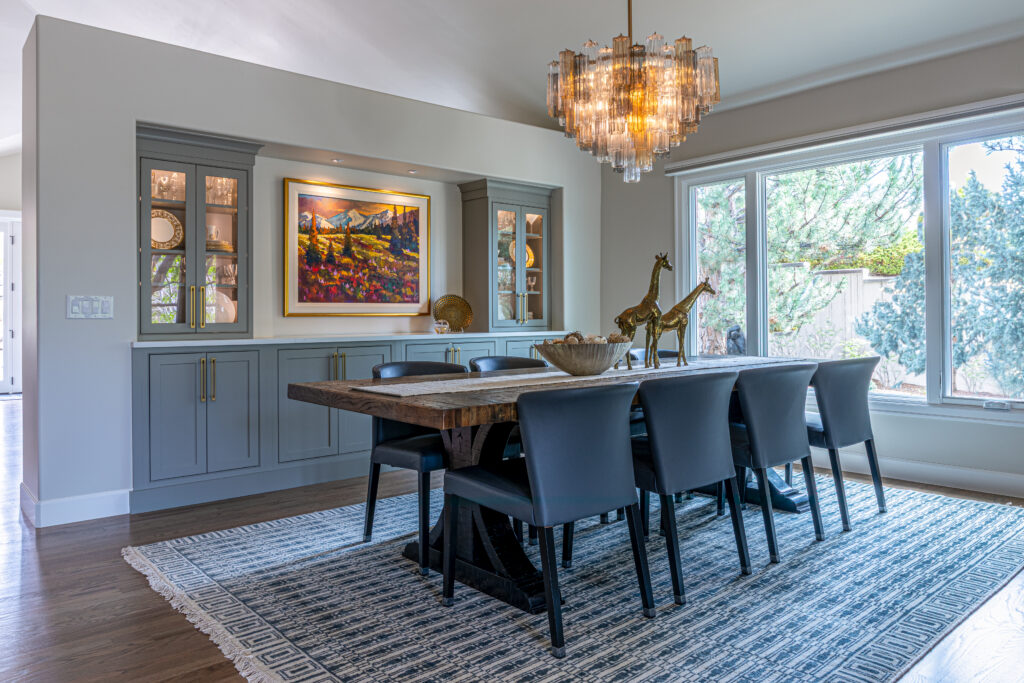
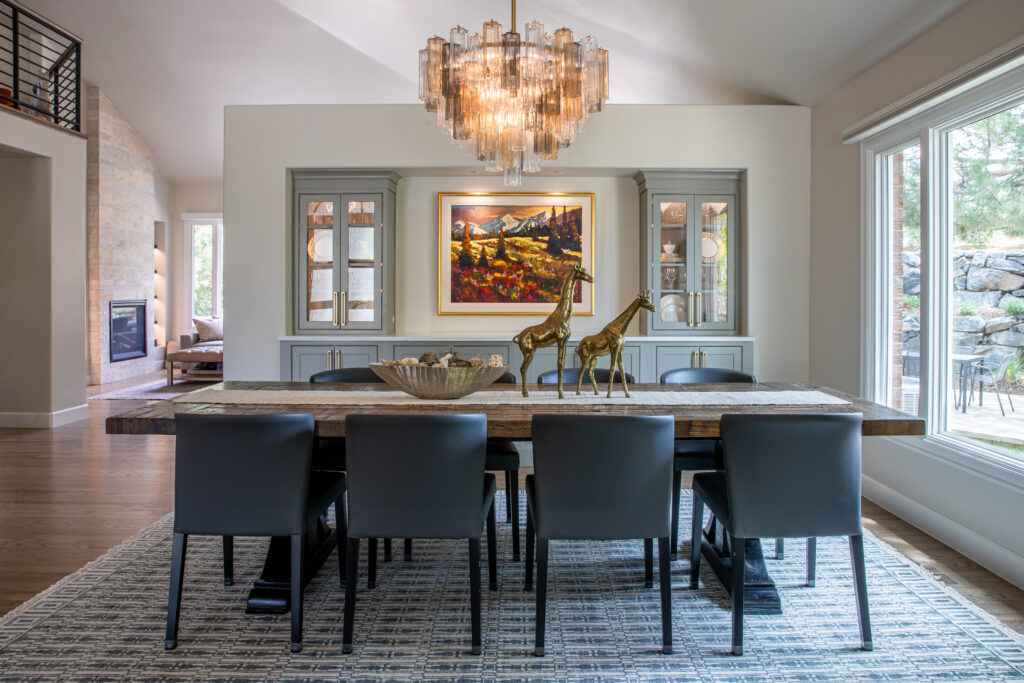
Enlarging the dining room window was one of the project’s most impactful decisions – and one of the least obvious ones. It allowed the table to sit perfectly centered beneath it, creating a balanced, anchored layout that the room had never had. Small adjustments to proportion have outsized effects on how a room feels. This is one of them.
A custom built-in buffet provides abundant storage while offering dedicated display space for artwork and entertaining essentials. The stair wall was opened with a modern horizontal railing that allows the eye to move between spaces. Statement lighting throughout anchors each room without competing with the architecture.
Family Room - A Fireplace That Finally Owns the Room
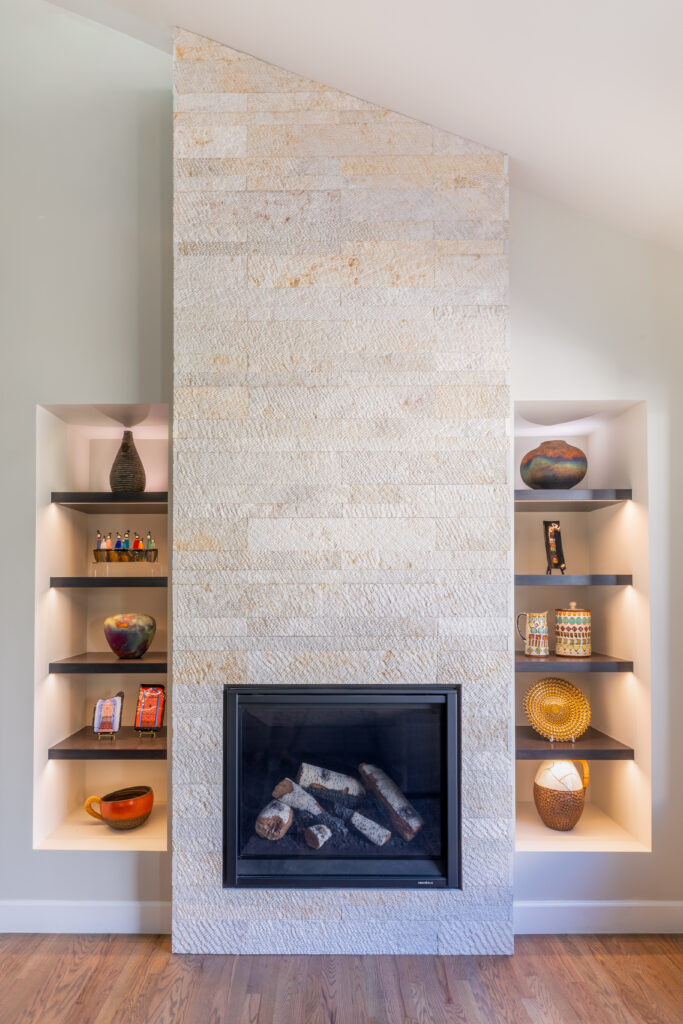
The original slider was replaced with a window, freeing the wall to accommodate a large sectional and a fireplace recentered as the room’s true focal point. Recentering a fireplace is a structural commitment. It requires moving the firebox, rebuilding the surround, and rethinking the entire wall. It’s the kind of decision that separates a remodel that solves the room from one that works around it.
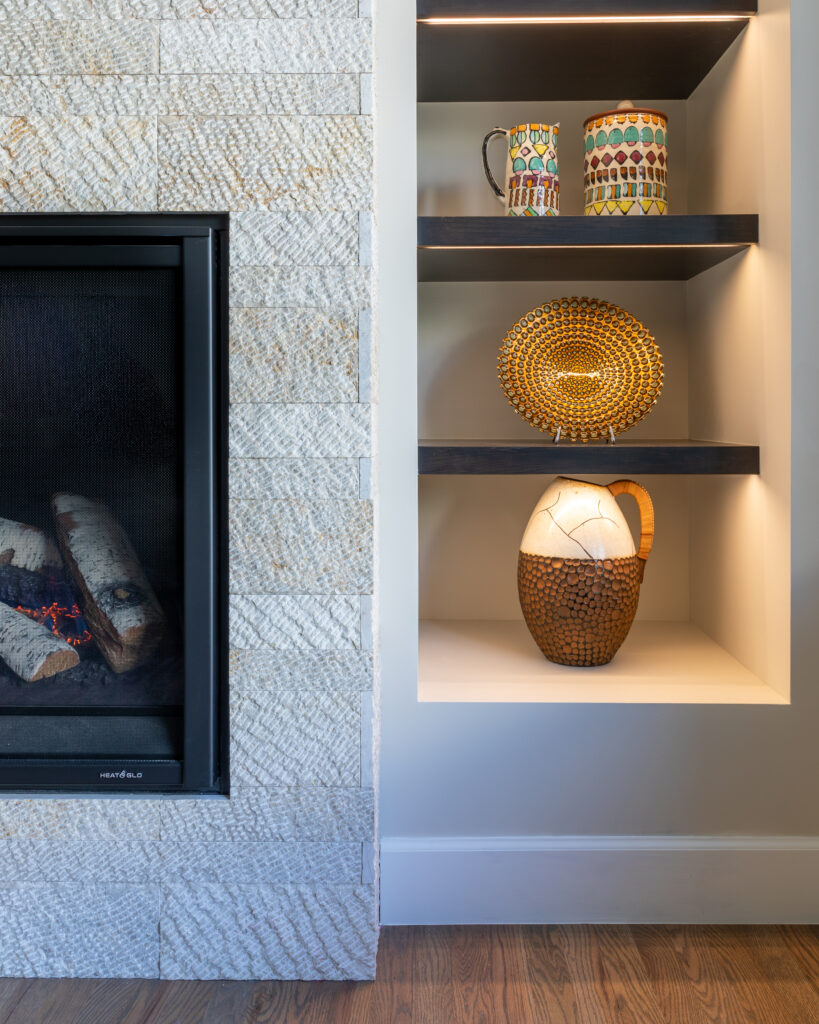
A custom wood mantel and built-in shelving with integrated lighting flank the firebox. The surround and ceiling detail are clad in Wave natural stone veneer from The Surface Shop – its subtle color variation and layered texture adding warmth, depth, and architectural presence without overwhelming the room. Stone at this scale reads differently than tile. It has weight. It makes the fireplace feel permanent in a way that painted drywall never does.
The Basement Bar - Elevated Entertainment
The basement bar is the room that stops people.
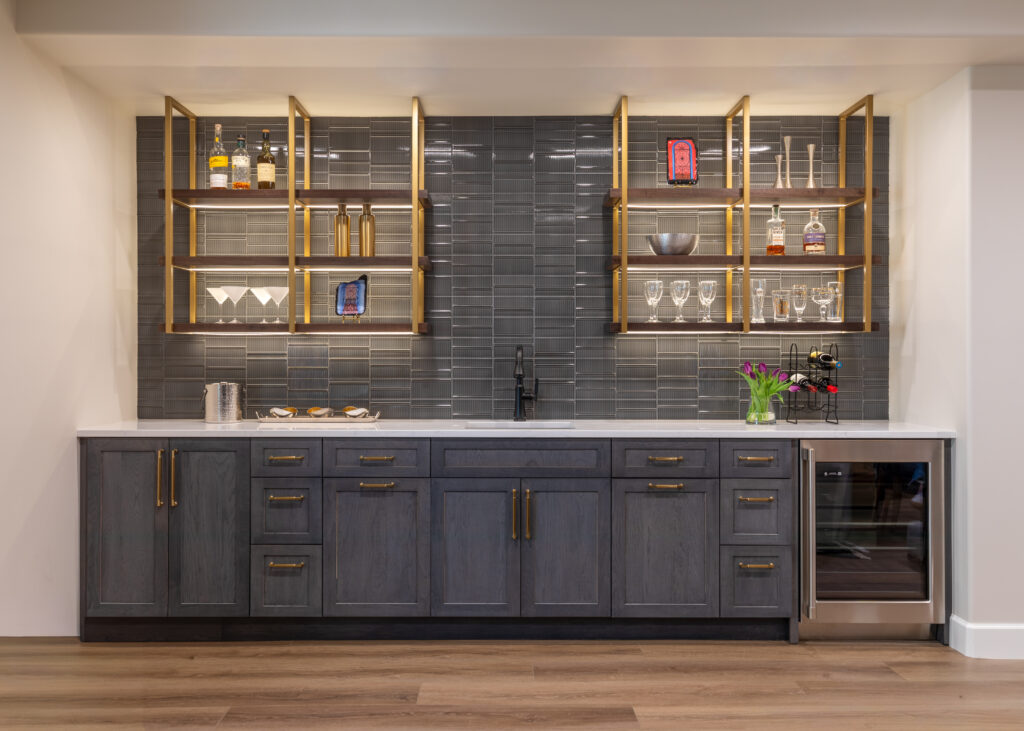
Charcoal Vector Reverb ceramic tile from TileBar lines the walls — a polished, graphic surface that catches and holds light differently than matte tile. Custom walnut shelving runs ceiling-to-floor, mounted with bold brass brackets and integrated lighting that illuminates the shelves from within. The combination of dark tile, warm wood, and brass hardware creates a space with real atmosphere – one that feels designed for a specific kind of evening rather than assembled from a catalog.
Basement bars are frequently an afterthought. A functional space with a mini fridge and some floating shelves. This one is a destination. It earns the square footage it occupies and it raises the perceived value of the entire home.
Bathrooms - Texture and Detail
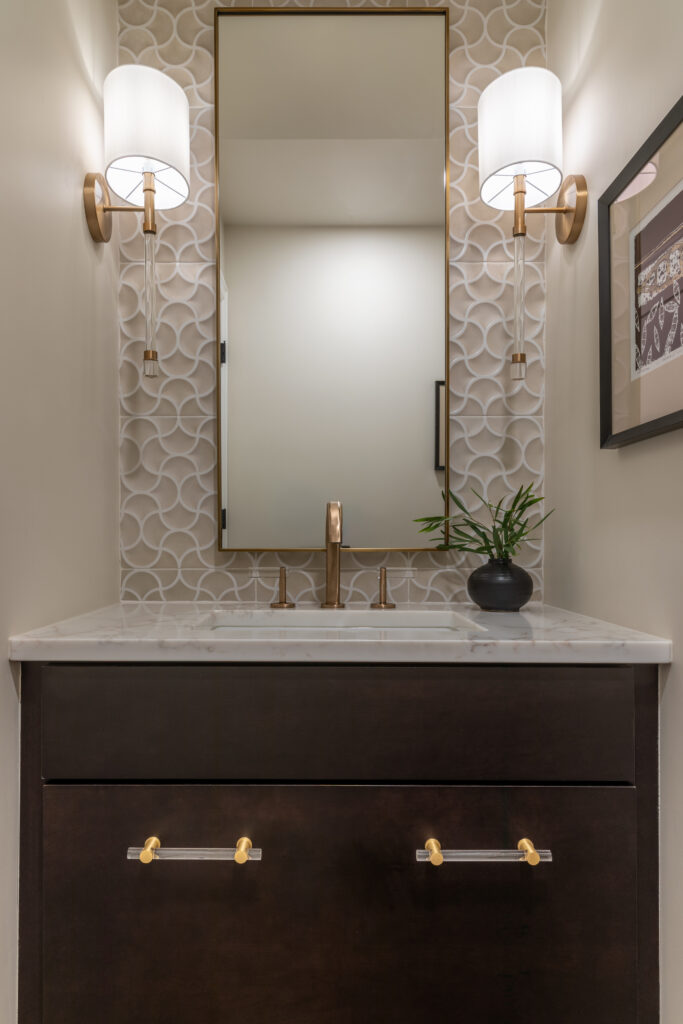
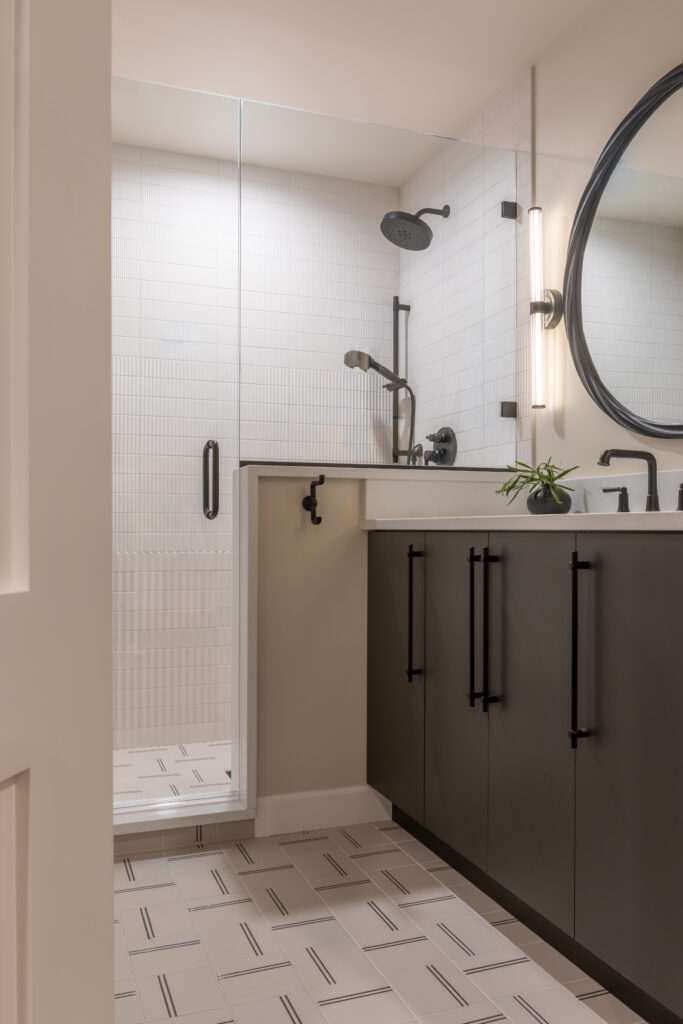
Each bathroom was approached as its own design moment rather than a coordinated set. Textured tile, layered materials, and deliberate pattern bring depth and character to spaces that could easily default to safe and forgettable. In a full home remodel, bathrooms are where clients often want to take risks they wouldn’t take in a living room — smaller scale, higher impact, more personal. DDG leaned into that.
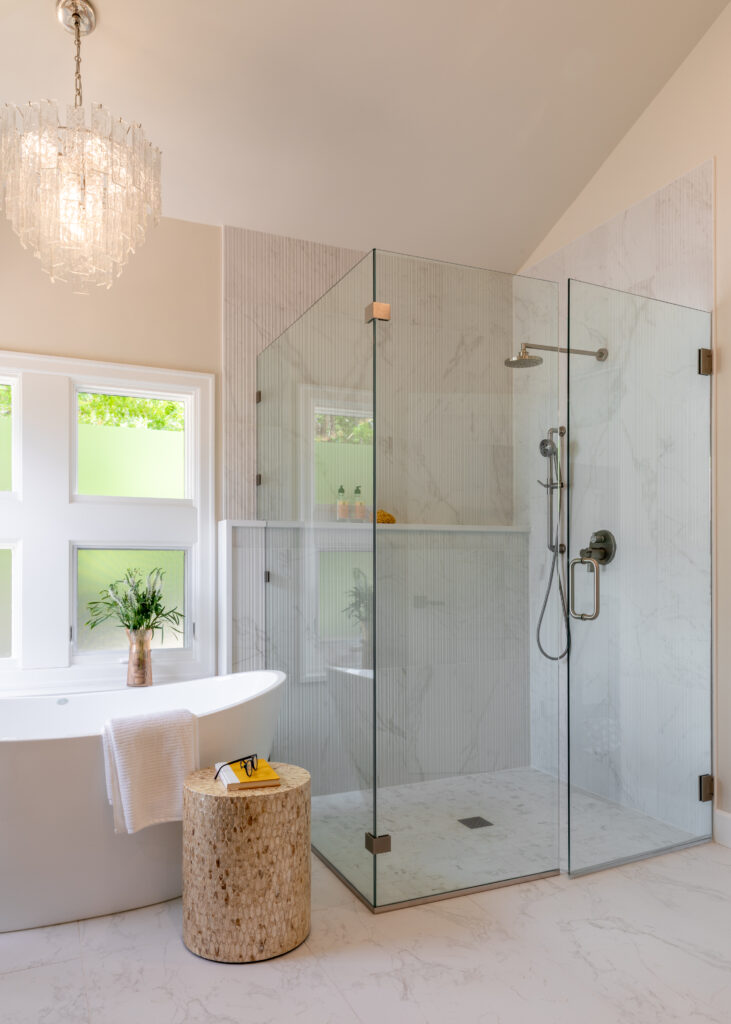
The primary bath features a frameless glass shower, updated vanity, and a clean, light-filled layout that contrasts directly with the heavy, dated space that existed before. Each bathroom tells its own story while remaining part of the same home.
Strong bones. Clear vision. And a home that finally matched both.
Denver Design Group is a full-service interior design studio based in Colorado, serving homeowners throughout the Denver Metro area including Greenwood Village, Littleton, Centennial, Lone Tree, Englewood, Wash Park, Park Hill, Highlands Ranch, and Castle Rock.