Transitional Zen Primary Suite Remodel - Littleton
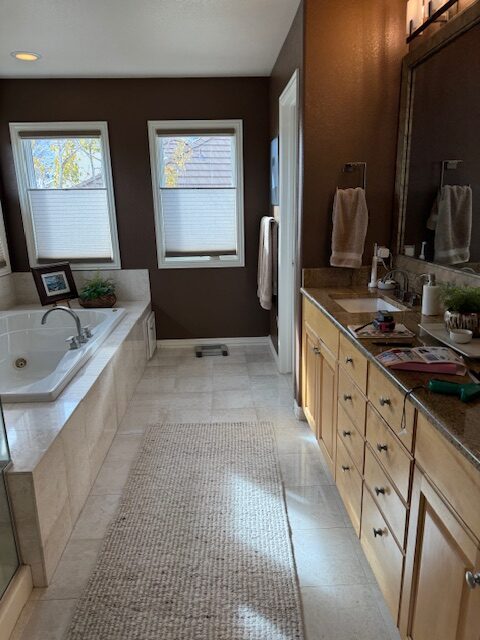
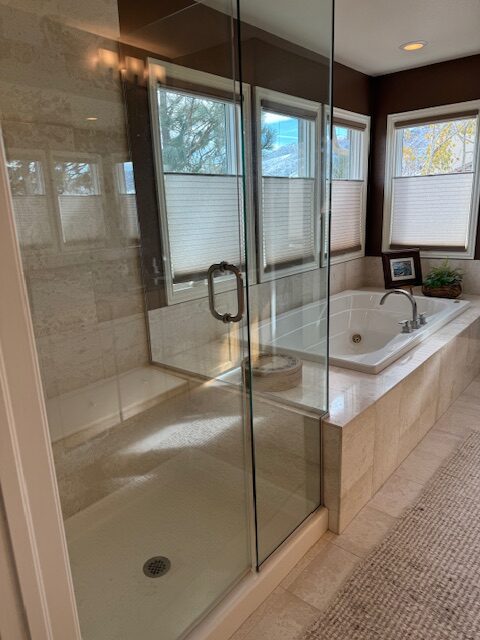
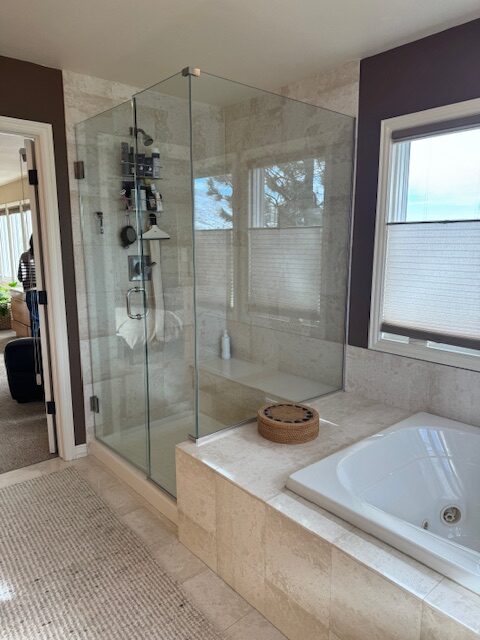
A 1991 builder-grade bathroom. Refreshed once in 2010. Still heavy, dark, and dated.
The layout worked. The clients knew it. What they wanted was to transform how the space felt – brighter, calmer, and worth walking into every morning. That’s a different design problem than starting from scratch. When the footprint stays intact, every decision has to work harder. There’s no structural drama to rely on. The transformation has to come from material, light, and detail.
Denver Design Group kept the footprint entirely intact and rebuilt everything within it.
Before — What We Were Working With:
Dark brown walls, an oversized built-in jacuzzi that dominated the room, a double vanity that felt heavy rather than grounded. The bones were fine. The atmosphere wasn’t. The jacuzzi was the defining problem – it consumed square footage, blocked light, and anchored the room in a design era that no longer served the clients. Removing it was the single decision that made everything else possible.
The Foundation - Light, Scale, and Proportion
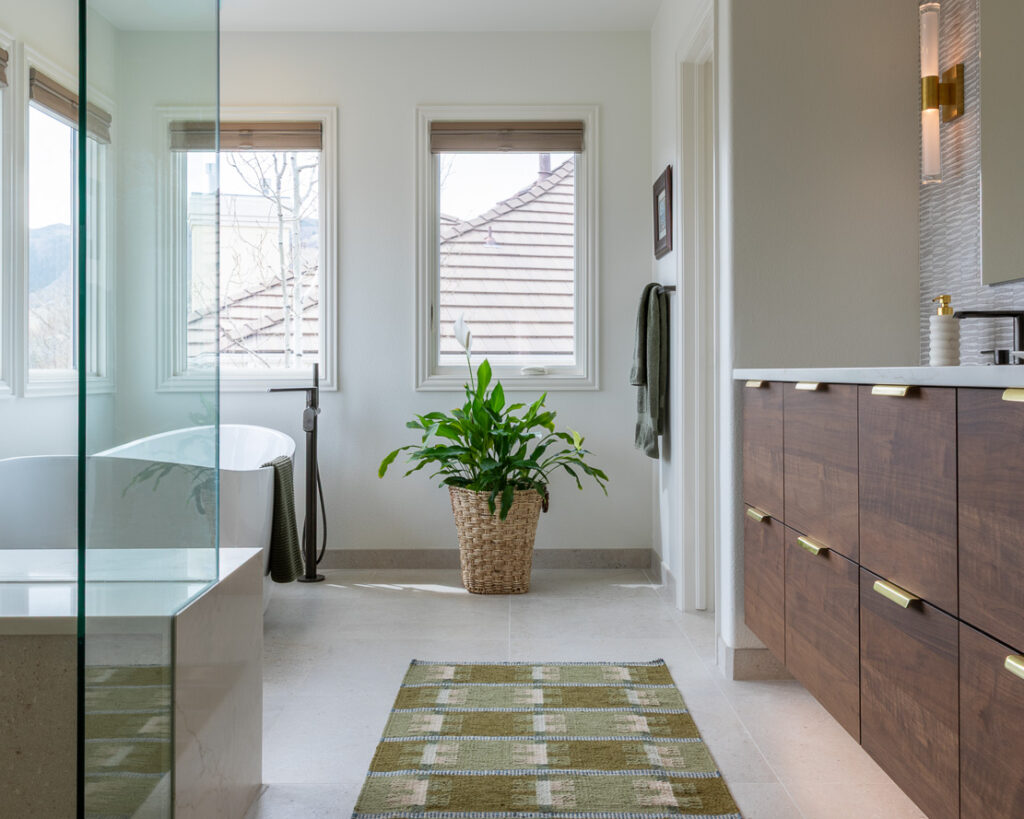
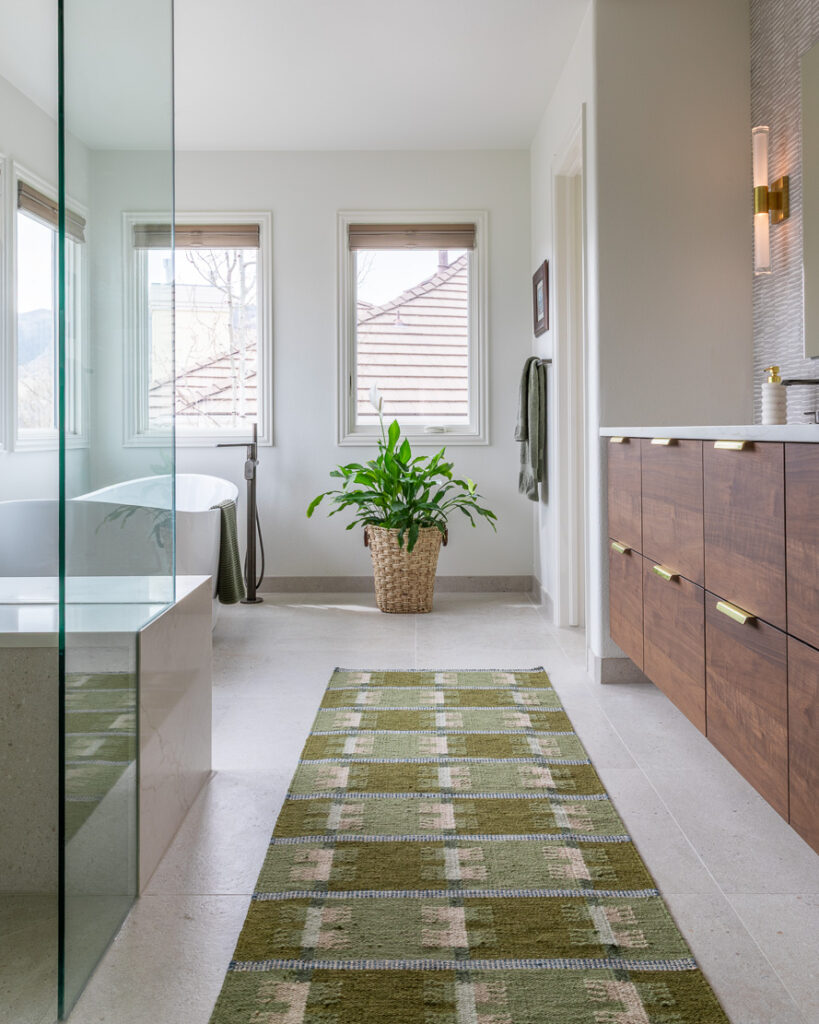
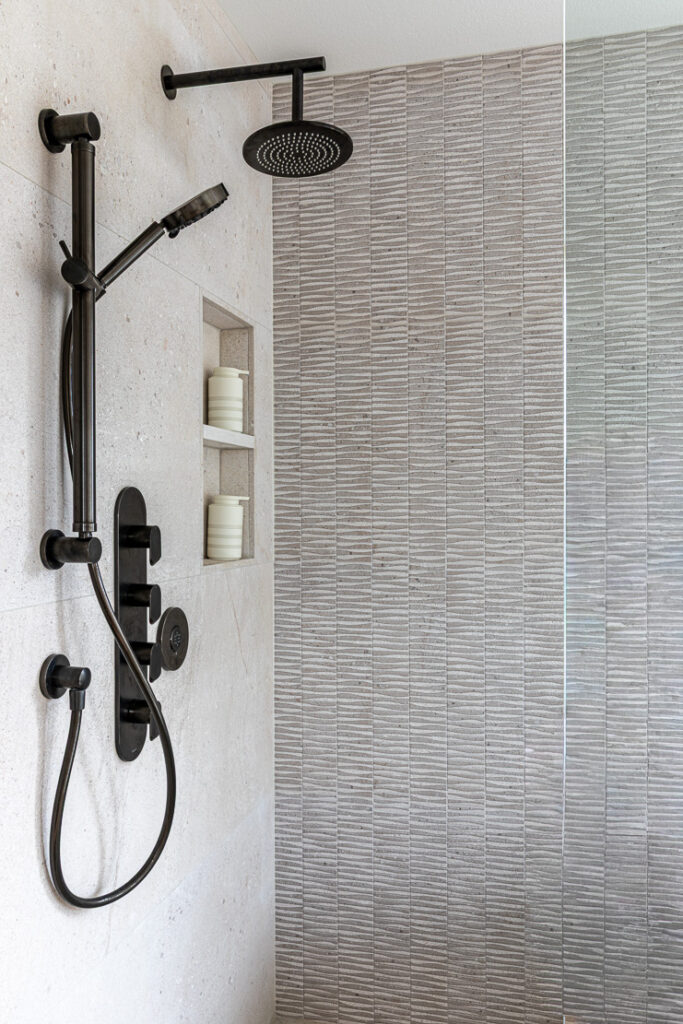
The first decision was the tile. Large-format 23×59 Porcelanosa tile, installed horizontally, creates a seamless stone-like surface that stretches the room visually without adding a single square foot. In a primary bathroom where the goal is serenity, grout lines are noise. The large format minimizes them, letting the eye move across the surface without interruption. The neutral palette keeps everything quiet, letting the architectural details carry the weight.
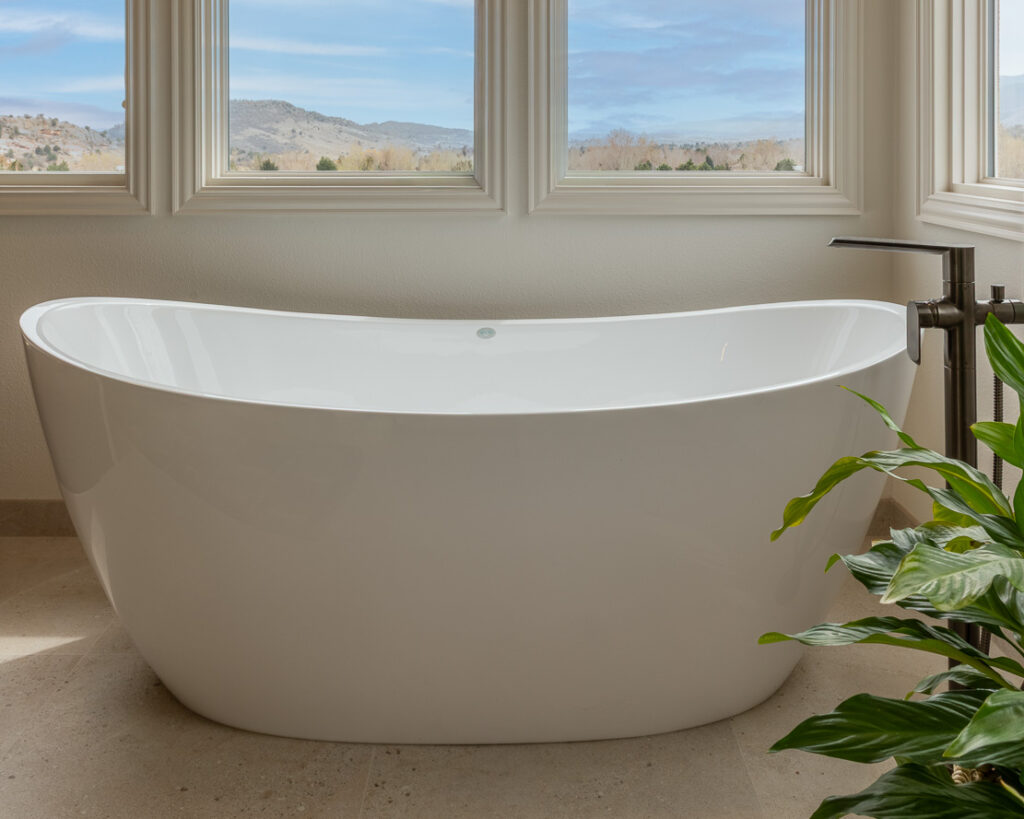
The oversized jacuzzi came out entirely, replaced by a freestanding soaking tub positioned under the window. The room immediately opened up – not because the square footage changed, but because the visual weight shifted. A freestanding tub reads as a deliberate choice. A built-in jacuzzi reads as a default. That distinction changes how the entire room feels.
The Custom Walnut Floating Vanity
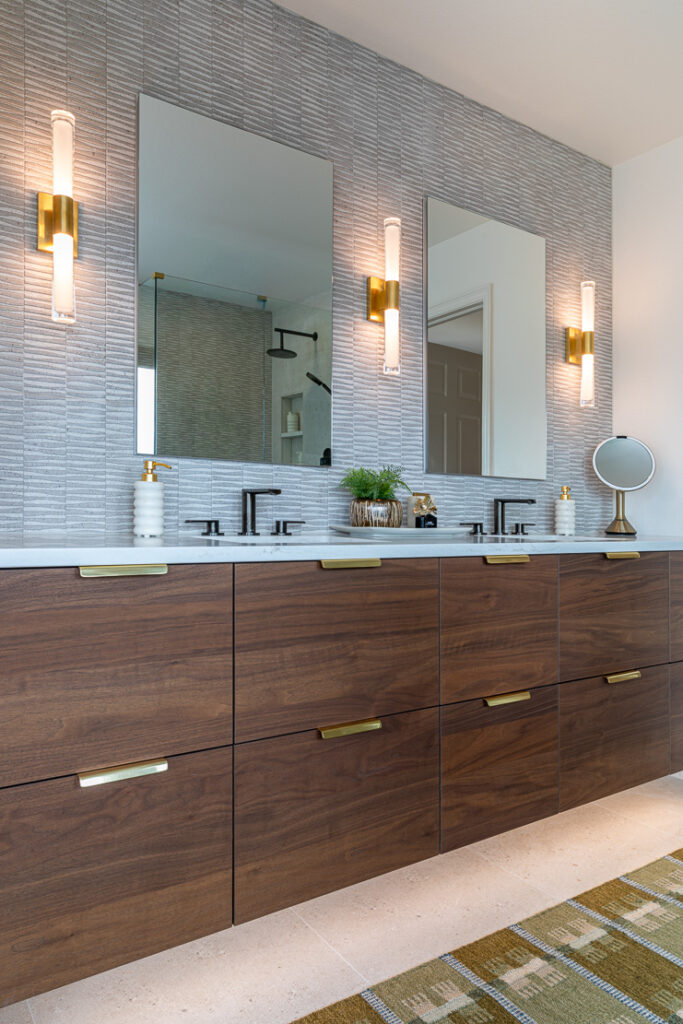
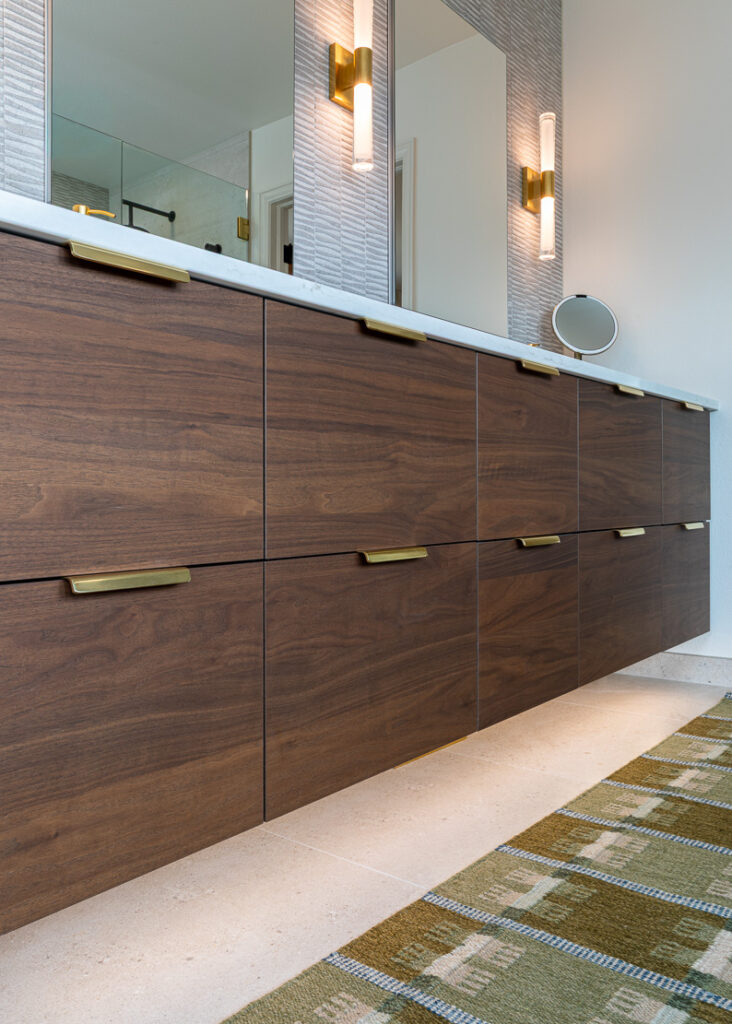
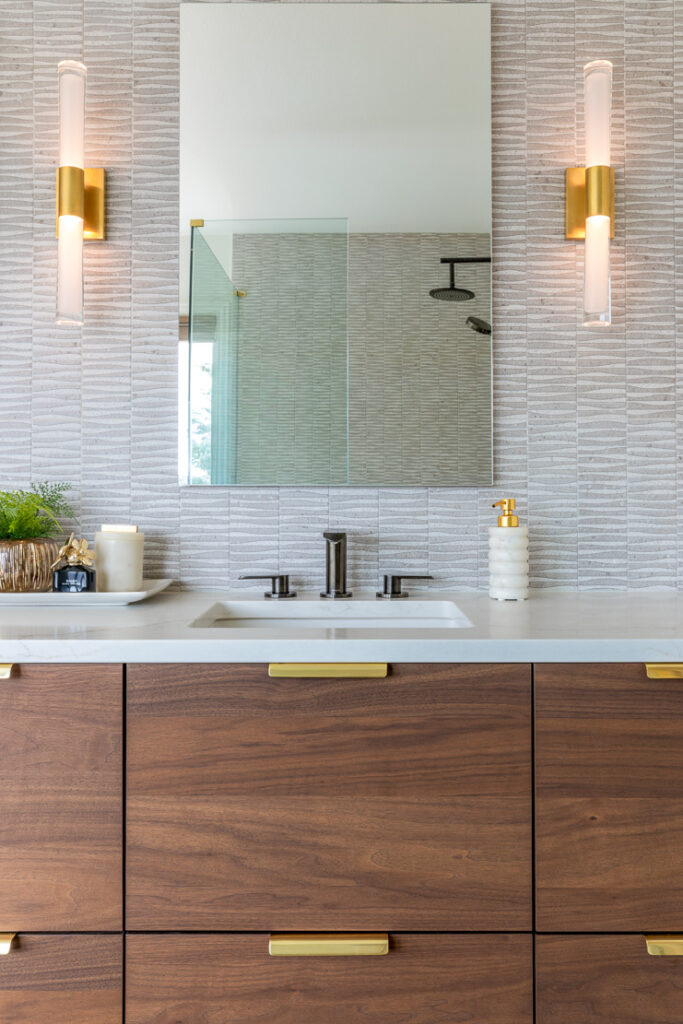
The walnut floating vanity is the centerpiece. Its rich, organic grain reads warm against the neutral tile without competing with it. Wood in a bathroom dominated by stone and glass does specific work – it prevents the space from feeling clinical. The grain provides visual interest without pattern, warmth without color.
Integrated under-cabinet lighting creates a subtle glow that doubles as elegant path lighting in the evening. This is the kind of detail that sounds minor in a specification and becomes significant in daily life. The vanity floats – the mount keeps the floor plane visible and the room feeling open, which matters in a space where every square foot is earned.
The Quartz Bench - Function Built Into the Design
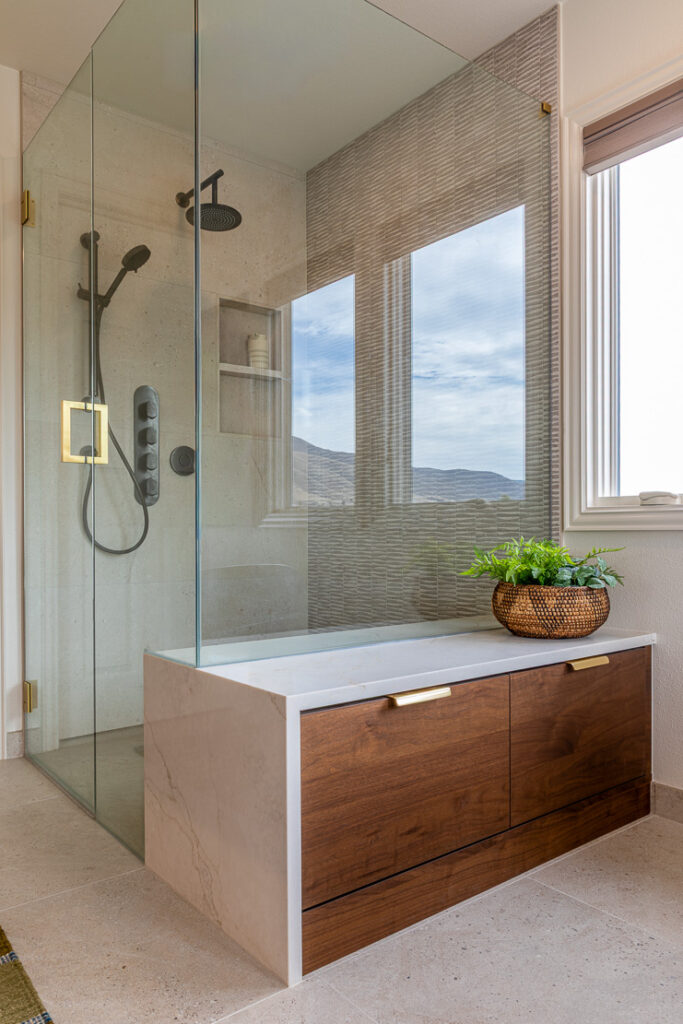
The custom quartz bench with a waterfall edge is the most distinctive feature in the room. It serves two purposes simultaneously: a seat inside the frameless glass shower and an outside perch for dressing or grooming. That dual function is the kind of problem-solving that separates a designed bathroom from a renovated one.
Custom walnut drawers were integrated beneath the bench, adding storage that doesn’t announce itself. In a bathroom designed around calm and restraint, visible storage would undermine everything. The drawers disappear into the structure. The storage exists without the clutter.
Hardware and Fixtures - The Finishing Layer
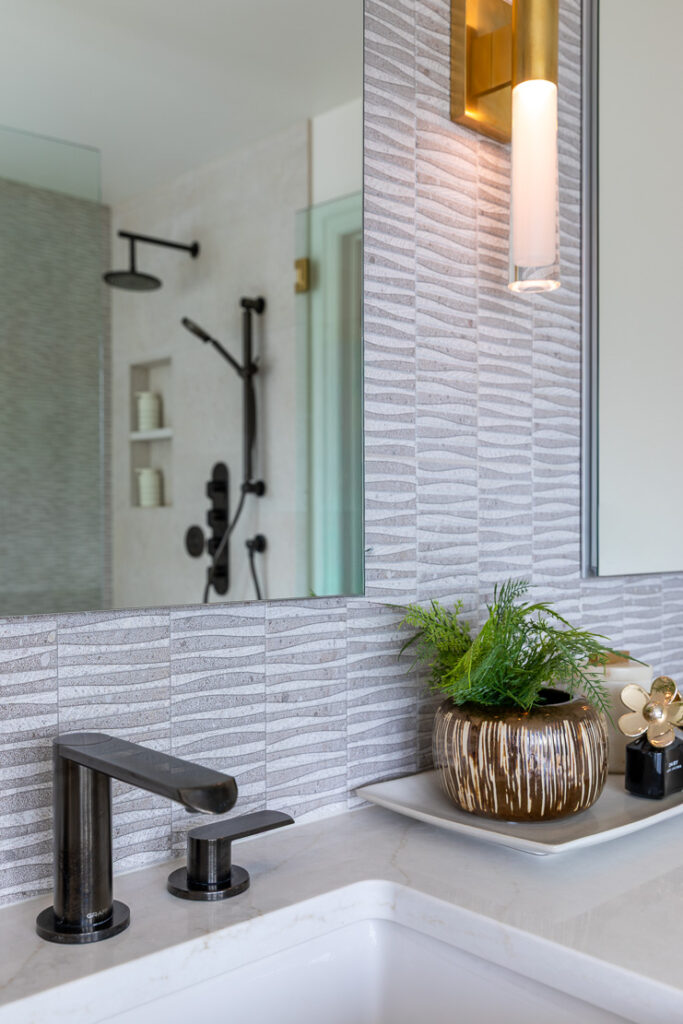
Onyx plumbing fixtures from Graff pair with hand-rubbed antique brass finishes on the Visual Comfort sconces, vanity hardware, and shower door. The decision to mix finishes – matte black and warm brass – is one that requires confidence. A single finish reads as safe. Two finishes in deliberate combination read as intentional. The black grounds the space. The brass warms it. Together they add depth without complicating the palette.
The Visual Comfort sconces were selected for their proportional relationship to the vanity mirror – scale in bathroom lighting is frequently underestimated. A fixture that’s too small reads as an afterthought. These earn their position on the wall.
The Result:
The same footprint. Completely different life inside it.
A primary bathroom should feel like a reset – the first room you enter in the morning and the last one you leave at night. When it’s heavy, dated, and dim, it sets the wrong tone for both. When it’s calm, light, and considered, it does something more valuable than look good. It changes how you start and end every day.
Denver Design Group is a full-service interior design studio based in Colorado, serving homeowners throughout the Denver Metro area including Littleton, Greenwood Village, Centennial, Lone Tree, Englewood, Wash Park, Park Hill, Highlands Ranch, and Castle Rock.